Reinventing the universal astrolabe
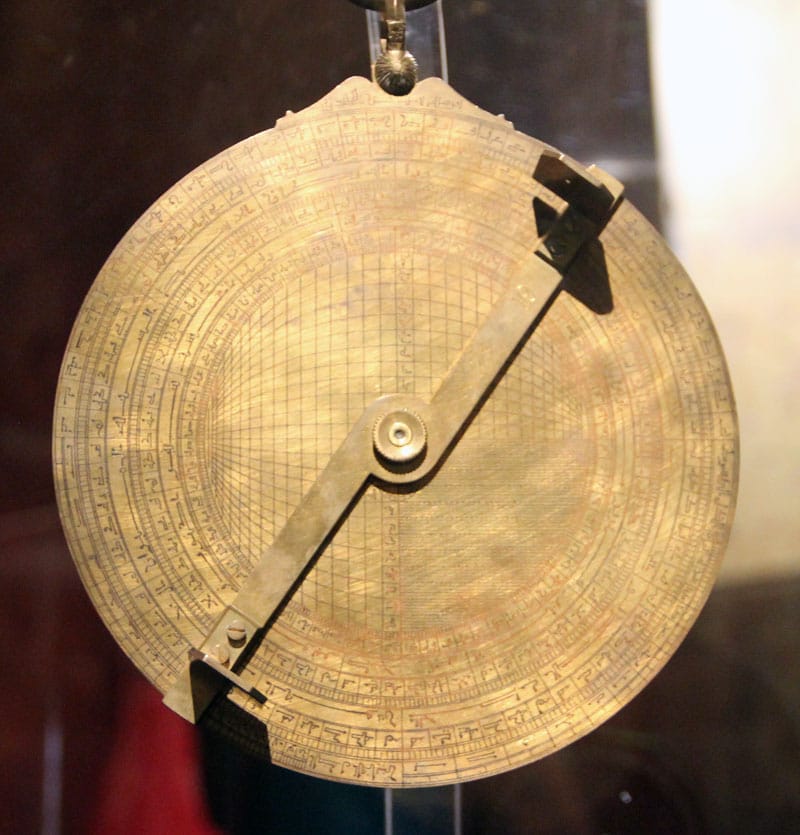
Not all new ideas are really new. Sometimes the 11th century already figured it out.
While working on my solar sliderule for correcting sextant observations I wanted to also add a celestial bearing calculator that would compute your heading to the sun given its declination of latitude, the current time or local hour angle, and your assumed position of latitude.
The math for this is complex and as a result most navigators use the Zn table from Pub 249, although I wanted a way to do it without an entire book of pre-computed numbers. There are things like the Bygrave cylindrical slide rule, which is enormous, or techniques like using a clear plastic overlay to a large table.
The astrolabe is a centuries old tool that does this computation for a specific latitude and was the inspiration for my "Thoughts on HO249" blog post. But that still requires a chart for each degree of latitude, much like the interchangable plates for the astrolabes.
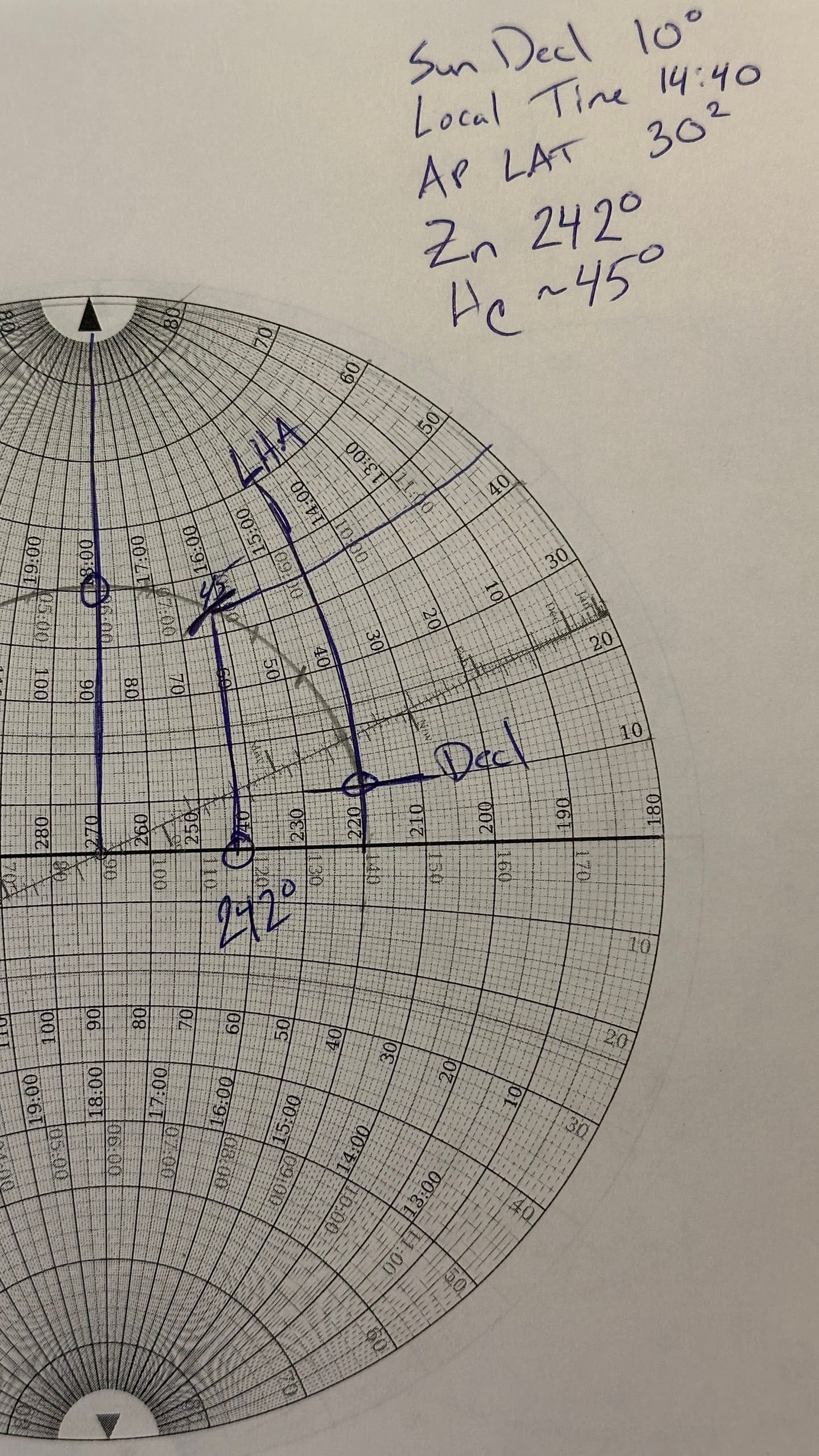
What I came up with is a stereographic projection that allows conversion from coordinates in Declination and Local Hour Angle to Height and Azimuth by rotating the chart by the colatitude (90 - the latitude, where southern hemisphere is negative).
The projection was chosen such that performing the rotation produced the correct result, and it turns out that this was also used by in the Saphae Arzachelis, a "universal astrolabe" invented in the 11th century by the astronomer Arzaquiel. A similar design was also used by Gemma Frisius in the 16th century.
I've made a few improvements to the design and will be demoing it at my 39C3 talk on celestial navigation if you want to see the slide rule version in action!